Michael
Brown (The Left Banke, Montage, Stories and The Beckies)
Albums reviewed
on this page: Walk Away Renee/Pretty Ballerina,
The Left Banke, Too, Montage,
Stories,
About Us,
Traveling Underground, The Beckies.
"Michael Brown" is a generic name for good reason. His real name is Michael
Lookofsky, the son of session violinist Harry Lookofsky. After
he met three vocalists in his father's studio, the Left Banke were
born, becoming the first of several pop groups that Brown
masterminded. The group
helped start a mini-movement in rock (almost a fad) - "baroque-pop",
which involved orchestration,
good harmonies, decent songs in the vein of "Eleanor Rigby"
or "Lady Jane". However,
the Left Banke were the only really successful group in this
sub-genre, and their success passed as quickly as the fad.
The
lead vocalist had the unlikely (or all too likely) name of Steve Martin, and an amazing
voice, smooth and high, which set them apart from other pop groups.
They initally broke up after Brown's father was unable to sell
their tracks to a label, only to have success with "Walk Away
Renee", which meriting touring (with the band playing their own
instruments ) and recording their first album. Brown, about 15
at the time, wanted to become a Brian Wilson figure, staying
home and writing, and wound up leaving the group. The others
released a weaker second album with more traditional material
and then went their separate ways, while Brown put-up
Montage (a poor man's Left Banke), and then formed Stories in the
early 70s. Stories made some great power-pop, using Brown's piano often and
incorporating classical elements. Their debut is disappointing
piano-pop, but things started to kick with their second album, About
Us. Brown's classical influence is present, sort of
creating prog-pop, but it still rocks. Unfortunately, Brown quit
the Stories before they had a hit with an uncharacteristic cover of
"Brother Louie", which employed lead singer Ian Lloyd's
scratchy tenor in a soul setting. Stories made a final
record, Traveling Underground, which has a harder sound,
before fading off into the sunset. Brown created a weaker
version of Stories with the Beckies in 1976, before disappearing from
any active role in the music recording world.
If you want to know more, the
people at All-Music Guide are a bit obsessed with Brown. Well,
at least Richie Untberger is.
Regretfully, There's Gonna
Be A Storm (Mercury 848 095-2) which has all the Left Banke ever
recorded, with the exception of a stray Steve Martin single and their
reunion album, has gone out of print. My advice is to pick it
up immediately if you see it.
The Left Banke: Michael
Brown (keyboards), Steve Martin (lead vocals), George
Cameron (vocals, drums), Steve Finn (vocals, bass).
Brown quit after one album. Various guitarists were members at
different points, in addition to the session people on recordings.
Montage: Bob Steurer (vocals), Vance Chapman
(vocals, drums), Mike Smyth (guitar, vocals), Lance
Cornelius (bass, vocals).
Stories:
Michael Brown (keyboards), Ian Lloyd (vocals), Steve
Love (guitar), Bryan Madey (drums). Brown
quit during the recording of About Us, and was replaced by
Kenneth Bichel. Kenny Aaronson (bass) was added
around then as well. Lloyd went solo after they broke
up.
The Beckies: Michael Brown
(keyboards), Mayo James McAllister (guitar), Gary
Hodgden (drums, vocals), Scott Trusty (vocals).
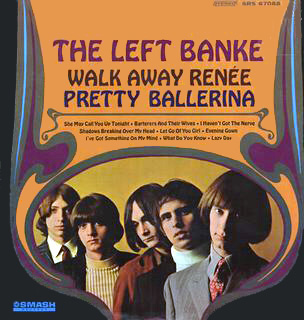 The
Left Banke: Walk Away Renee/Pretty Ballerina (1967),
****
The
Left Banke: Walk Away Renee/Pretty Ballerina (1967),
****
After
the Left Banke scored a big hit with "Walk Away Renee" they
put together this record, which is pretty good. Almost
everything is orchestrated, but it is done well (the excellent
"Shadows Breaking Over My Head"). Most of the time
the orchestration gives the group a very moody atmosphere ("Pretty
Ballerina"), enhanced by Martin's excellent singing. His
voice is downright amazing; you cannott tell if he even uses
falsetto, as the high notes sound just as smooth as the rest.
However, Brown was really the foundation of the group, writing most of
their songs and contributing piano to most tracks. At their
worst, the Left Banke fall back on vocal harmonies and tread water
musically ("Let Go Of You Girl"), with the exception of one
dreadful Ringo country number (Brown's sole vocal spotlight "What
Do You Know"). At the opposite end, Walk Away Renee is excellent
piano-pop ("She May Call You Up Tonight"). Despite
being released in 1967 there's very few traces of psych ("Lazy
Day" with its repeating fuzz guitar line may qualify).
Certainly worth a shot if you're a Zombies fan, or you just like
gorguous pop music.
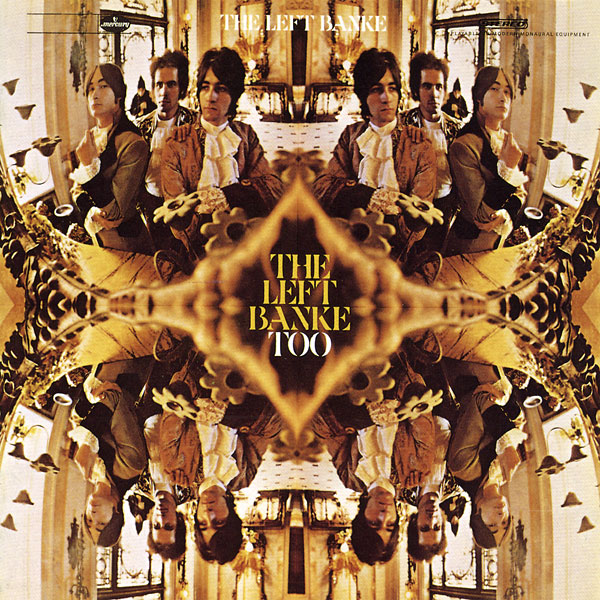 The
Left Banke, Too (1968), ***
The
Left Banke, Too (1968), ***
Brown left
before the group before this album was recorded, and it suffers
from his absence. Too's songs are weaker (mainly
written by Finn and semi-member Tom Feher), and the group compensates
for the loss of Brown by smothering orchestration on almost
everything, and including more guitar. Whatever this approach's drawbacks, Too has some good material, such as
"Desiree", a strong, leftover Brown track.
The orchestrated numbers are frustrating with some decent songs
underneath ("Dark Is the Bark" has intrusive
horns), but the influences are more far-reaching than
on their previous album. "My Friend Today" has an
awesome Motown-like intro, with a real cool bass line underneath
Martin's singing, despite the ensuing strings and horns. Some
other experiments don't work as well - the Kinks
knockoff "Bryant Hotel" with Martin doing his best Ray
Davies impression, or the various psych influences like the backwards
coda on "In the Morning Light", and occasionally
meaningless lyrics. Still, the album has enough good songs like
the crunching power-pop of "Goodbye Holly" or the more
typical "There's Gonna Be a Storm" with Martin's top-notch
singing, to merit three
stars. A very young Stephen
Tyler sings backup for a couple of songs.
 Montage
(1969), **1/2
Montage
(1969), **1/2
A low-rent version of the Left
Banke - same writers (Brown and either Bert Sommer or Tom Feher),
same lightly orchestrated piano sound, even "Desiree" (an inferior
version), but with lackluster results. Brown's new group recorded
their new album at roughly the same time
the Left Banke made Too. While the Left Banke without Brown was
not exactly stellar, Brown without the Left
Banke was not particularly better. He may not have been an official
member, but Brown played all the keyboards, wrote most of the material
and produced. Yet, his material isn't as strong this time. Still,
there's no mistaking that this came from the same source as The Left
Banke - it has the same feeling, but has a quieter and simpler feel
to it, and the vocals arrangements are not as intricate. In this
sense, Montage was closer to Walk Away Renee's pop than the
more forceful approach of Too. The group does have some gems,
as on the rather melancholic "She's Alone" with its
excellent string orchestration. But while the near duplication
of Brown's previous sound can comes off beautifully ("The
Song is Love", "I Shall Call Her Mary", "Tinsel
and Ivy"), many songs have a different angle. They include a semi auto-biographical
number ("Grand Pianist" sort of a Michael Brown's Song)
and the happy time nuclear bomb tune "Wake Up Jimmy (Something Is
Happening Outside)". The underlying problem is that Montage's vocalists were not up to the Left
Banke's level, making imitations difficult or painful. Lead singer Vance Chapman was
easily talented enough to have been in the Left Banke, but he lacks
Steve Martin's cool
name and ability to blow the listener away. Chapman had a more
fragile tone, and lacks Martin's range. Ironically, this album
would have benefited from some of Too's heavy-handed orchestration. The
decision to have Bob Steurer sing lead on a couple of songs is a
mistake; his voice is rather thick and he even sings wrong
notes in "Men are Building Sand". Because the band
members are all unknown quantities (one can see the photo montage was
done in two sessions - one at a public gig and the other strictly for
promos) it is possible they could
be session men. If one isn't yet skeptical, the liner notes
include a line from Brown describing the group as "my friends
more than they were people who could really do an album."
The album is also really short - under half an hour, and the bonus
tracks are moderately worthless. Hardcore Left Banke fans will
like this.
Steve Martin: "Love Songs in the Night" / "Two by Two" (1970 or 71)
Unofficially the Left Banke, as both Finn and Cameron appear.
Released as a single and included in the soundtrack to the movie Hot Parts. It looks like it has only been reissued on a compilation in 1985.
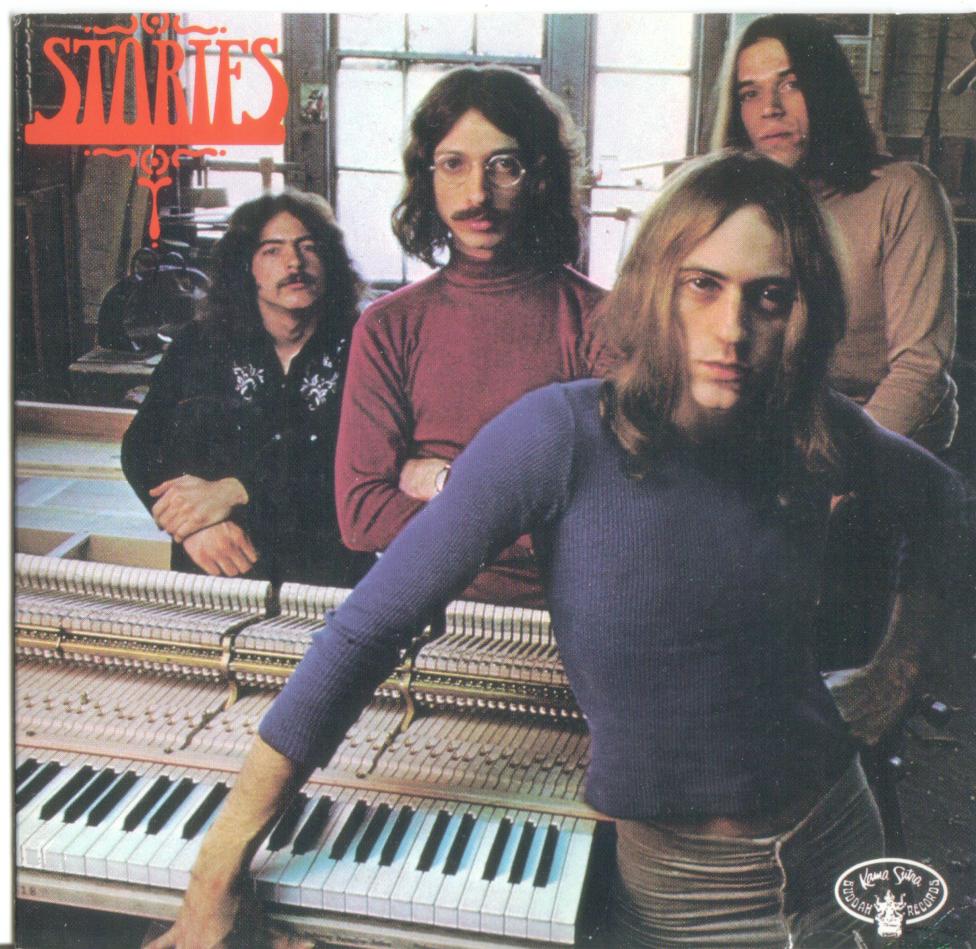 Stories
(1972), **1/2
Stories
(1972), **1/2
Unsuccessful, and the production is terrible.
Although he was not as talented, Brown surley faced the same
challenges Rod Argent had in
shifting from the Zombies to Argent. Take some pop and add more
rock, but like the antifreeze and water mixture, how much
of each? Stories
straddles the line, dropping the vocal harmonies and complex backing of
earlier Brown projects in favor of piano-pop with some odd
characteristics. A main shift in the formula occurs with the
singer -
vocalist/bassist Ian Lloyd, who does not get the benefit of the
traditional glorious backing vocals here. Lloyd was not quite a
Rod Stewart clone, but Stewart with a slightly "better" voice, and a Beatles
infatuation: more of a "rock" voice than a
piano-pop voice, by far. The album's self-production overplays
the piano-pop thing to the group's detriment as well. Well,
what did the group or producer like? Under the "like"
column mark down Lloyd's vocals, and Brown's keyboards. Under
"dislike" put Steve Love's guitar and Lloyd's bass. The decisions make sense, but are wrong. Madley gets
stuck sort of 1-2ing the beat lots of times, Lowe is inaudible
frequently, and Lloyd's bass is so far dispersed it might as well be
in the Heavyside layer. Brown dominates the group
instrumentally, sometimes playing off himself, and becomes
tiring. When the
piano-pop is on, it's decent, like the good-nature Beatles retro rag
"I'm Coming Home" which reached the lower parts of the
charts as a single, or the goofy "St. James". Brown had plenty of classical musical ideas, and in better
surroundings some of the songs might have been great ("You Told
Me", "High and Low", "Kathleen"). Stories has a few attempts to be lush, but the band does not excel
at them ("Kathleen"). Lloyd's lyrics rarely venture beyond regular romantic arena (one of the exceptions, "Hello
People" sounds like 60s peace anthem), helping to keep this
album at an "just ordinary" level. Still, glimpses of their
harder-rocking future rise in "Take Cover" and "Step
Back". In the end, this is just a disappointingly average, lightweight
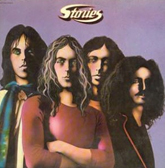
piano-pop album. (Side note - doesn't
Brown looks like Jeff Goldblum with a bad mustache and glasses on
this album?)
 Stories:
About Us (1973), ***1/2
Stories:
About Us (1973), ***1/2
A good rock album - faster, louder and with
actual production. Stories decided to use the
Beatles more as a stepping stone rather than a blueprint, and in
doing so probably captured more of the Beatles' essence.
Producer Eddie Kramer unleashes Steve
Love, who almost single-handedly makes this a power-pop album
by driving each song. Lloyd's bass has also been allowed to ascend to a discernable level. Lloyd's
voice sounds a bit like Jon Anderson's here, if Jon Anderson sang
like a normal person (and was crossed with Rod Stewart). He
gets a chance to use his rock voice, instead of competing with a
saccherine Eric Carmen over piano-pop songs. About Us
starts off with "Darling", a
really great song which has classical lines all over the
place, but still rocks. Heck, they even use some glowing
mellotron in the background. Of course a good share of
Beatles imitations ("Don't Let Me Down" - not the Beatles
song, the annoying George Washington-echoing "Believe Me", the
drumming on "Changes Have Begun"), but they certainly
outgrew the wimpy pop of Stories. Just listen to "Hey
France", which pounds away, as evidentially they forgot that
sitars weren't cool in 1973. The back side isn't as good, with
some brief instrumentals ("Circles", "Down Time
Blooze") to fill out the time. The last song was their one
big hit, the smooth and funky "Brother
Louie", and was recorded after Brown left the group. Produced by
Kenny Kerner and Richie Wise, the song is good,
but quite different from everything else on the record. Also,
Brown shaved and dropped the glasses for this one - good call.
Sometimes a re-christening by a different producer is
all one needs.
 Ian
Lloyd and Stories: Traveling Underground (1973), ***
Ian
Lloyd and Stories: Traveling Underground (1973), ***
Harder,
more dense, expansive and almost glammish at points. I credit this welcome spark to new
keyboardist Kenneth Bichel. Whereas Brown favored
simple piano parts, Bichel takes the Rick
Wakeman approach - change sounds often and create a background with layered keyboards. This isn't to say he
sounds like Wakeman (he doesn't), but he does some interesting things
(the unexpected modulating and blunt moog line in "Soft Rain",
or the film soundtrack-like interlude that is "Freefall").
The album's increased production is very noticable (the strange but
enjoyable "Hard When You're So Far Away" with a phased drum
intro, and echoey multiple vocal lines), thanks to new bassist Kenny
Aaronson's former bandmates Kenny Kerner and Richie Wise. But
all in all, the real keys are the tracks that bookend the album -
"Bridges" and the title track, where Steve Love cranks it
up and Lloyd manages to deliver a pair of fantastic songs.
Stories had evolved beyond power-pop - the group actually sounds
threatening enough on the last track that you expect Lloyd to kick
down your door and deliver the song to your face. Traveling Underground has one
final beauty of a power-pop song, "I Can't Understand It",
but the rest of the album does not
break out. The two songs designed to cash in on the success of
"Brother Louie" ("I It Feels Good, Do It" and
"Mammy Blue", the latter perhaps a re-write of
their hit) fail to do so. Stories were going in an interesting
direction on here, and the album is pretty quality, even if it wasn't
great. Produced by Kenny Kerner, Richie Wise and the group. A pity they broke up.
Doesn't Traveling seem
like it should have two l's? Anyways, Lloyd
The
Beckies (1976)
Brown's
descent continued with the lone album from his late 70s group. He
made only minor changes from the Stories' format - adding some 50s
undercurrents ("River Bayou", "Other Side of Town"),
and a vague nod towards disco ("Song Called Love"). The
remainder sound like cut-rate Stories tracks with weaker musicians ("Fran", "One of These Days").
Brown's playing and production is pretty anachronistic throughout,
adding strings in places and sticking to acoustic piano.
While most musicians' eschewing of synthesizers is to be commended,
Brown puts far too much emphasis on his chattering keyboards, perhaps to compensate.
Some kick-ass harmonies could have helped these songs ("River
Song" is as good as it gets), as many have faily pretty
melodies, but both Scott Trusty and drummer Gary Hodgden continue the
downward arc of vocalists. Only when the focus is aimed more towards
Jimmy McAllister's guitar does the band's power-pop take off, mostly
on "Right by My Side (Etude)" probably due to the
involvement of associate producer Rick Rowe. Honorable mentions go to
"Midnight & You" and "Can't Be Alone", but
the Beckies had the wrong way to go about the right sound.
Produced by Brown and Ron Frangipane, with Brown and Hodgden
co-writing the songs.
The Left Banke: Strangers on a Train (rec. 1978, rel. 1986)
Demos recorded by Martin, Finn and Cameron. Also released as Voices Calling.
Just
walk away to the music page...